Payment Gateways Enhancing Fluid Movement Across Mobile Roulette and Blackjack Experiences
Written by Jordan Bauer · Nov 14, 2026

Payment Gateways Enhancing Fluid Movement Across Mobile Roulette and Blackjack Experiences
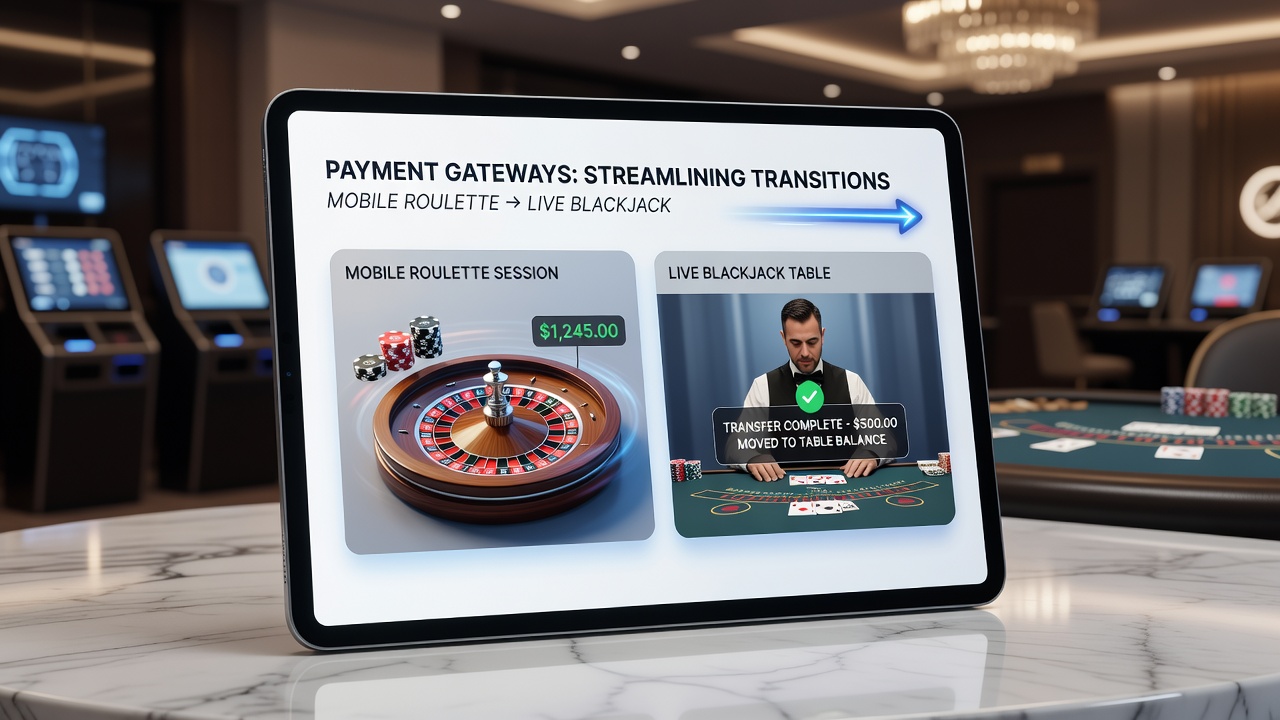
Payment gateways now handle rapid fund movements that let players shift from mobile roulette sessions to live blackjack tables without interruption, and data from industry reports indicate these systems process transfers in under three seconds during peak hours. Observers note that in November 2026 multiple platforms recorded higher session continuity rates after integrating instant settlement features, while regulatory filings from the New Jersey Division of Gaming Enforcement show transaction volumes rising alongside these upgrades. Researchers at the University of Nevada Reno tracked user behavior across several operators and found that seamless wallet transfers correlate with extended play periods spanning both game types.
Core Mechanics Behind Instant Transfers
Modern gateways rely on API connections that link mobile wallets directly to live dealer platforms, and this architecture allows balances to update across roulette and blackjack environments simultaneously. When a player finishes a roulette spin the system deducts the stake, credits any winnings, and prepares the same funds for the blackjack table in a single flow. Figures from the European Gaming and Betting Association reveal that operators adopting unified ledgers reduced failed transfer incidents by 42 percent compared with earlier separate-wallet models. Those who manage backend infrastructure report that tokenization keeps card details isolated while still permitting sub-second authorizations between game servers.
Security Layers Supporting Cross-Game Movement
Encryption protocols and real-time fraud detection run in parallel with payment processing, and these measures verify each transition before funds reach the live table. Multi-factor authentication often triggers only on larger amounts, which keeps routine switches between roulette and blackjack quick. Data compiled by the Canadian Gaming Association shows that platforms using behavioral analytics flagged fewer suspicious patterns after they implemented continuous session monitoring across game categories. Experts observe that compliance with varying state rules requires gateways to maintain separate reporting streams, yet the player experiences one uninterrupted sequence from mobile roulette to the blackjack dealer.
Regional Adoption Patterns in Late 2026
North American markets expanded gateway capabilities faster than other regions during the third quarter of 2026, and European operators followed with similar integrations by November. Australian regulatory updates required additional player verification steps for cross-game transfers, which lengthened average processing times by roughly one second according to local industry summaries. In contrast, several Asian-facing platforms introduced region-specific wallets that auto-convert currencies during the switch from roulette to blackjack, and transaction logs indicate these features stabilized play volumes even when exchange rates fluctuated. Observers note that smaller jurisdictions continue to test sandbox environments before full deployment, whereas larger markets already publish monthly statistics on seamless transfer success rates.
Technical Integration Examples
One operator in New Jersey linked its mobile roulette application to an existing live blackjack studio through a single payment rail, and subsequent audits confirmed that average fund movement latency dropped below two seconds. Another platform serving multiple European countries adopted a shared ledger model that automatically reconciles roulette winnings with blackjack buy-ins across currencies. Studies published by the International Center for Gaming Regulation document similar rollouts where API calls between the payment gateway and game servers occur in both directions, allowing real-time balance reflection without manual intervention. Those who oversee these systems emphasize that fallback procedures activate within milliseconds if a primary rail encounters delays, preserving session continuity.
Player Journey Data and Usage Trends
Analytics platforms record that roughly 68 percent of users who begin on mobile roulette proceed to live blackjack within the same login period when instant transfers are available. Session logs from November 2026 indicate that repeat transitions between the two formats increased by 31 percent year-over-year among accounts using the newest gateway versions. Regulatory bodies in several U.S. states now require operators to disclose average transfer times in public reports, and early filings suggest most platforms meet sub-five-second benchmarks. Researchers tracking device-level data note that tablet users complete switches slightly faster than smartphone users, largely because larger screens reduce input errors during confirmation steps.
Future Infrastructure Developments
Upcoming gateway versions plan to incorporate blockchain settlement layers that could further compress transfer windows between roulette and blackjack environments. Industry consortiums have begun drafting interoperability standards so that funds held in one operator's wallet remain accessible when players move to a partner platform's live tables. Preliminary tests conducted in controlled environments show promise for cross-operator movement, yet full rollout depends on coordinated regulatory approvals across jurisdictions. Data collected through the first half of 2026 already demonstrates that each reduction in transfer friction corresponds with measurable growth in combined roulette and blackjack participation metrics.
Conclusion
Payment gateways continue to refine the technical pathways that connect mobile roulette sessions with live blackjack tables, and ongoing infrastructure investments point toward even shorter settlement intervals in the months ahead. Regional regulatory filings and academic studies together document steady progress in speed, security, and cross-game compatibility. As November 2026 figures enter public records, the measurable outcomes of these integrations remain visible in session continuity statistics and transaction success rates across multiple markets.